
Elevation of Machine Learning Security Game

Description
Description
If you’re looking to understand AI/ML security risks, get the whole team involved and discover threats before they become incidents, Elevation of MLSec gives you a practical, engaging way to do it.
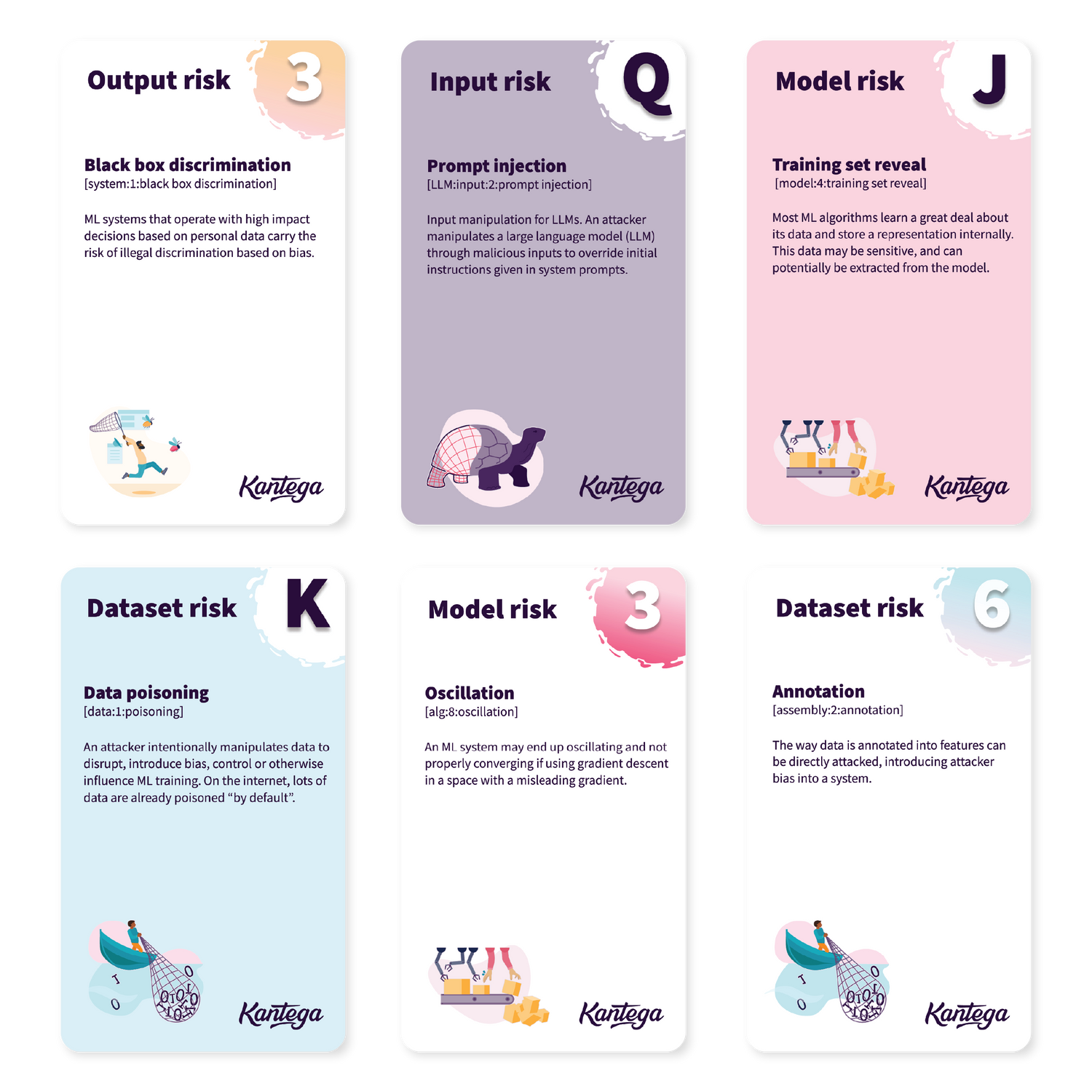
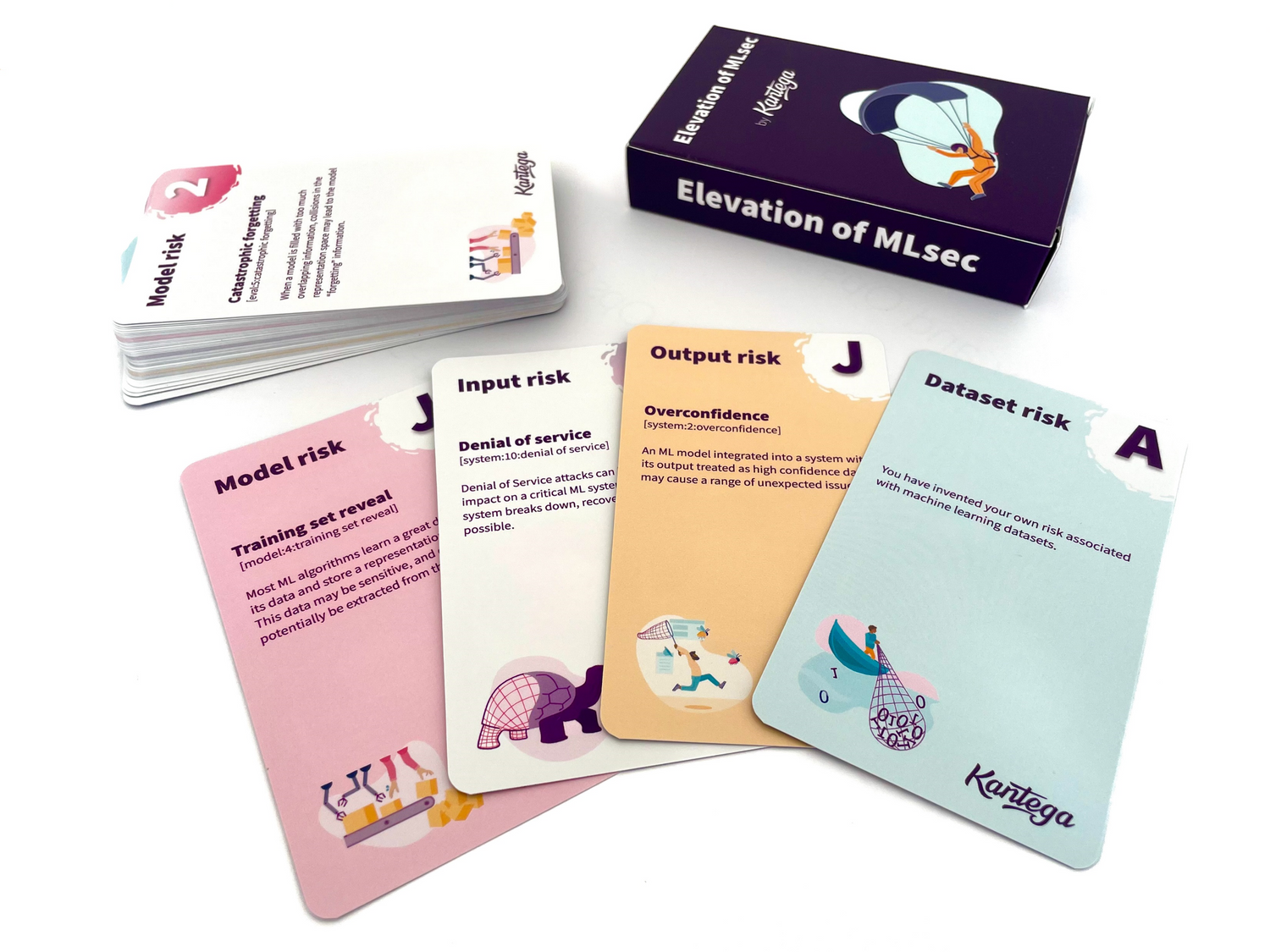
Created by Elias Brattli Sørensen, Elevation of MLSec is a threat modeling card game inspired by Adam Shostack’s Elevation of Privilege game, and based on the risk framework published by the Berryville Institute of Machine Learning (BIML).
Each card captures a specific AI or machine learning security threat, based on recognised research from BIML and OWASP, and turns it into a practical prompt your team can apply to the system in front of them.
Elevation of MLSec has been carefully designed for security teams, developers, ML engineers, architects, consultants and anyone responsible for building or deploying AI systems securely. No specialist AI security expertise is required. The cards help mixed teams explore threats together, share knowledge and ask better security questions.
 Elevation of MLSec is © 2024 Kantega AS
Bulk Pricing
Bulk Pricing
Automatically applied at checkout:
| Buy | Discount |
|---|---|
| 5 or more decks | 5% off |
| 10 or more decks | 10% off |
| 20 or more decks | 15% off |
| 30 or more decks | 20% off |
Elevation of Machine Learning Security Game
Specifications
Specifications
-
SuitsDataset risks (Raw, Training, Assembly), Model risks (Algorithm, Evaluation, Model), Input risks , Output risks
-
# Cards
-
Created by
Try a branded version
Try a branded version
If you'd like to encourage the use of this technique within your team or organisation, a branded deck is a great way to demonstrate your support and commitment to the process.
Created from established AI and machine learning security research
The content is based primarily on security research from the Berryville Institute of Machine Learning (BIML), including its BIML-78 Architectural Risk Analysis of Machine Learning Systems and BIML-LLM24 analysis of Large Language Models.
These risks are supplemented with LLM-specific threats from the OWASP Top 10 for Large Language Model Applications.
For Elevation of MLSec, this research has been distilled into four practical areas that are easier to explore during a threat modelling session:
Dataset Risks · Input Risks · Model Risks · Output Risks
Together, these four areas form the DIMO framework, helping teams examine security risks across the key parts of an AI or machine learning system, including the interactions between them.
Rather than asking your team to work through lengthy security frameworks during a workshop, Elevation of MLSec puts individual threats directly into their hands, one card at a time.
How to play?

Hybrid teams? No problem
Play our threat modeling games remotely
with the power of physical cards!


